general
Beyond the Paper Ticket: Why Manual Kitchen Management is Slowing Down Your Growth
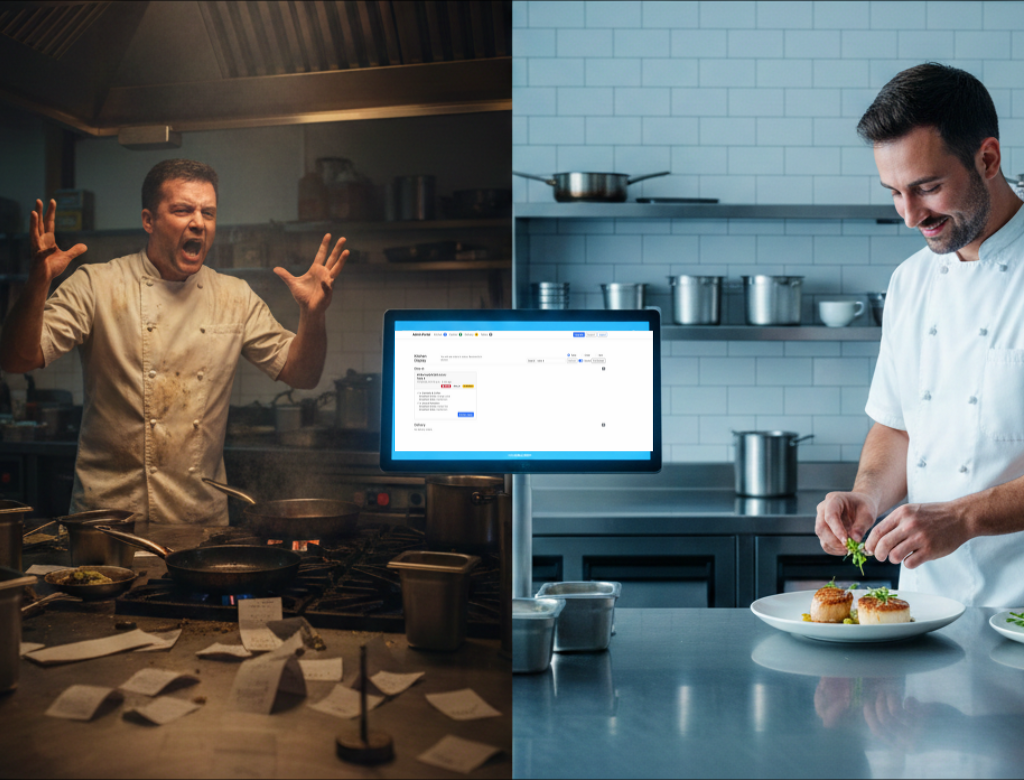
n the restaurant industry, the "rush" is a double-edged sword. It’s what pays the bills, but it’s also when things are most likely to fall apart. If your kitchen still relies on handwritten notes or thermal paper tickets clipped to a rail, you aren't just being "traditional"—you are likely bottlenecking your own growth.
The Hidden Cost of Paper
Paper tickets are the silent killers of kitchen efficiency. They get lost, they get wet, they get greasy, and most importantly, they don't talk back. When a kitchen relies on paper, there is a data blackout. As an owner, you can’t easily track:
How long a specific dish takes to prep.
Which station is currently overwhelmed.
The exact moment an order was "lost" in the shuffle.
Why Manual Systems Limit Your Scaling
Human Error: Misreading "Medium Rare" as "Medium Well" during a loud, busy shift leads to food waste and unhappy customers.
Lack of Real-Time Sequencing: Paper doesn't know which order to prioritize based on delivery driver proximity or table seating time.
The "Shouting" Culture: Manual kitchens rely on verbal communication, which increases stress levels and leads to staff burnout.
How a KDS Saves the Day (and Your Margins)
A Kitchen Display System (KDS), like the one integrated into OrderCraft, transforms the heart of your restaurant from a chaotic workspace into a precision-engineered environment.
Color-Coded Urgency: Orders change color based on how long they’ve been active, instantly alerting the head chef to delays before the customer notices.
Instant Updates: If a customer changes their order at the front desk or via the web portal, the KDS updates the kitchen screen in real-time. No more running back to the kitchen to "kill a ticket."
Seamless Integration: Platforms like OrderCraft bridge the gap between your KDS, your AI-driven menu, and your delivery tracking. This means the kitchen knows exactly when to start a meal so it’s hot the second the delivery driver arrives.
The Bottom Line
Transitioning from paper to a digital flow isn't just about "using tech"—it’s about predictability. When you can measure your kitchen’s performance, you can improve it. Scaling a restaurant becomes a matter of data, not just luck.
Do you have a question?
If something is not clear, you can send us your question about this topic.